

by Harrison Rosner, special to NY Sports Report
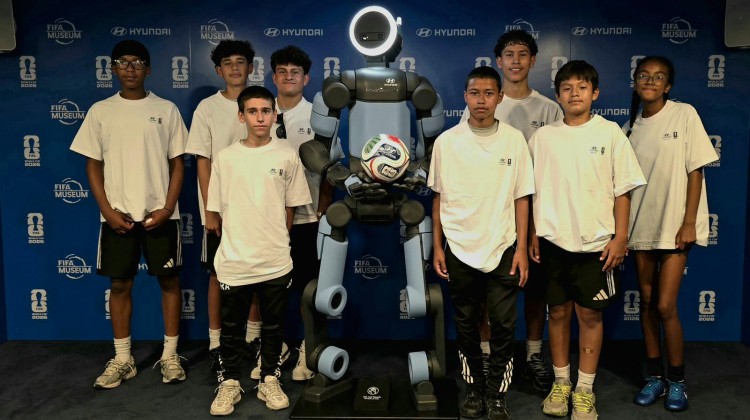
On the afternoon of June 30th, Hyundai hosted an event at the FIFA Museum with ten young athletes from the Metropolitan Oval Academy as a part of their “Next is Now” campaign. The event was meant to inspire the next generation both on and off the field by directly exposing them to the World Cup’s history and future. It did just that.
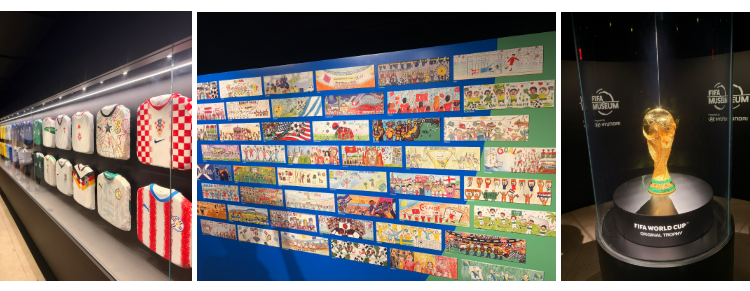
The athletes and their parents took a tour through the entire museum, starting with an exhibit that showcased artifacts from every World Cup in history. From details of Uruguay’s championship in 1930 to Messi’s game-worn jersey from the 2022 final, the memorabilia was wide ranging. The academy members showed great appreciation for everything the exhibit held. From there, students were moved to the other half of the museum, which displayed all current World Cup jerseys as well as the glorious FIFA World Cup Trophy. These exhibits had the longest lines and were clearly some of the favorites of everyone at the museum, many of whom waited lengthy amounts of time to snap a picture with the trophy.
Finally, museum tourists were escorted to the Hyundai exhibit, which stated the brand’s mission for bringing forth the future in robotics and mobility and related that vision to the future of soccer. The exhibit included some of the tournament’s most iconic historical moments, displayed both on screen and through robot figurines positioned like players celebrating. Hyundai was deliberate in showing their commitment to getting the youth involved, including a hand-drawn team banner from a child of each World Cup nation. The jersey display, trophy display, and hand-drawn banners can all be seen below.
Throughout the tour, we were able to spark up tons of conversation with the Met Oval Academy students, their parents, and other afternoon museum-goers. We asked them what their thoughts on the museum were, how the museum enhanced their World Cup experience, and what they thought of the World Cup as a whole. From these conversations, we got a ton of insight into what everyday fans have gathered from the tournament–and we ourselves learned a lot.
Our first conversation was with a young boy of Ghanaian nationality, and a very good player from what we heard from his teammates. He talked about how seeing everything at the museum inspired him to want to be the best. “One day, I want this to be me,” he said with a smile on his face. “I want to hold that trophy.” All of the youth players shared that same passion.
They looked at the artifacts of some of the game legends with pure awe. In that aspect, FIFA and Hyundai both achieved their goal of inspiring the next generation to create their own futures and push towards greatness. When asked about whether or not the museum represented his culture and fandom of his nation, the Ghanaian kid responded with a prideful, resounding yes. That was another area in which FIFA massively succeeded.
The museum reflects what the World Cup is all about–bringing people from all corners of the globe together. One French fan that was not a part of the tour but still found herself at the museum noted that the event showed how soccer is for the common man rather than the elite business owners of the world. “The beautiful part about this sport is that it’s the people’s game,” she remarked.
Of the many fans we spoke to, there were plenty who knew little to no English. I remember one particular instance of walking through the gallery of jerseys alongside two Ecuadorian men who made the trip to the New York City area to watch their national team play. We barely spoke, but we still communicated. Of course, their favorite jerseys were the Ecuadorian yellows–and I must admit that those are some of my favorites as well. This moment was more than a sharing of our favorite shirts, though. It was the perfect representation of the notion that while not all fans may speak the same language, we do all speak soccer. That is the power of sport–forming a community from very different individuals with just a common interest.
While the museum seemed to overwhelmingly do its job in bringing people into one place to enjoy the history and true meaning of the World Cup, some fans felt as though the tournament itself has not necessarily done the same. That same French woman who commented on soccer not belonging to the rich felt the ticketing practices in places like NYNJ Stadium have massively outpriced true fans.
Even for group stage matches, prices reached well into the thousands just to sit at the top of stadiums. Many seemed to feel that FIFA has exploited its fans and turned games into a luxury rather than a right. Despite that, FIFA undoubtedly succeeded in doing with its museum what it failed to do for the tournament’s matches–allowing anyone from anywhere to share their love for the game.
This was just the first stop for the Met Oval athletes, who happen to play and train at the oldest continuous use soccer facility in America, one which has hosted scores of National Championships and has helped launch the careers of current and former professional players, as well as thousands of others from every walk of life who now love the game. The second step was actually seeing the World Cup…and after their tour they headed to New York/New Jersey Stadium as part of the Hyundai game day experience to see the best of the best in this year’s tournament… Kylian Mbappé and France best Sweden 3-0.
While attending the match capped the day, the learnings that started at the museum can;t be understated, and showed how and why this World Cup will resonate with fans…and athletes of all ages for years to come.
Leave a Reply